
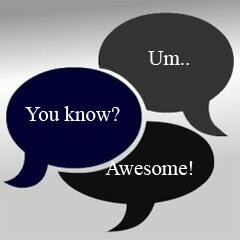
A typical Kiwi chin-wag
The three cornerstones of all Kiwi conversation. In parts of New Zealand, it is possible to have an entire dialogue with just these three, short, phrases.
But if, some argue, the ultimate aim of language is to say the most, with the least amount of words (a sort of unified theory of linguistics, if you will) then surely this is evidence of a highly advanced culture?
Others say it just makes us sound thick.
To foreigners, however, this economy of phrase in the Kiwi dialect can be plain confusing. And there are other local variations to look out for too, so here are some tips, to help you better understand, and be understood by, New Zealanders;
- Awesome is the most commonly used (and for some, the only) positive adjective in the New Zealand language, and as such, it’s use does not necessarily imply it’s true, almost biblical, meaning. For example, say you arrive home from work and say to a flatmate, “I picked up some milk from the Dairy, because we were running out,” if they reply with “Awesome!”, they do not literally mean,“That stirs in me feelings of immense religious awe, respect or fear!” They probably mean something closer to “Oh, that’s nice.” The adjectives level of gravity should be determined by it’s context, not it’s repeated use.
- Kiwi politicians and broadcasters like to start statements or replies with a short, sharp “Look…”. This does not mean that they want you, literally, to look. They might actually mean ‘Listen’. Unless they have prepared a PowerPoint presentation, but even then, it is more likely being employed as a popular tool for fluffing their way out of a sticky question, with a defensive, ill-informed, but authoritative sounding line. One that was written for them by a hard-nosed, handsome PR woman, named Sue or Yvonne, who wears a cropped bob haircut and a lot black clothes.
- If ‘Look’ by itself does not add enough gravity to a statement, the addition of the word ‘Now’ (as in, ‘Now, look..’) is considered, in New Zealand, the best way to further intone seriousness. It also reminds your audience that you want them to ‘Look’ (or ‘Listen’, which is generally the literal meaning) immediately, rather than 10 minutes after, or, as is more often the case, never.
- The word ‘Basically’ is applied an awful lot to descriptions of events, actions or instructions. While this does not necessarily imply that the person speaking has a limited vocabulary, 9 times out of 10, it basically does.
- Heavily repetitive use of the phrase “You know?” during conversation, does generally not require a response. It should be regarded as rhetorical, even when it’s frequency sometimes makes it hard to concentrate on the words that come between it. Try to block it out of your head, or find someone more interesting to speak to.
- You’ll also hear a lot of a word that sounds like “Yeahnah“, which literally translates as ‘Yes/No’. You might assume that this combination of both a positive and negative affirmation together is simply a laboured, slightly retarded, way of saying ‘Maybe’. This is a common mistake. In fact, it’s meaning depends entirely on the context. Sometimes it means ‘Yes’, other times, it means ‘No’. But mostly, it means nothing at all, and is just a way of filling space while the person thinks of something better to say.
- But perhaps the most difficult aspect of the Kiwi dialect to get used to, is the sense that you are forever being asked a question. For example, if a colleague says to you,”Um, yeahnah, I had an awesome game of netball at the weekend?”your first reaction might be to reply,”Well did you, or didn’t you?” This would be a mistake, and may cause offense. It may even result in you being left out of the next staff game of social touch rugby. Because in actual fact, your colleague was not asking you if they had a good game of netball, they were telling you they did. But to stress this point, in the New Zealand dialect (and possibly too because they are a little over-excited about the awesome game of netball), it is common to inflect upwards at the end of a sentence, making everything sound like a question.
There are some interesting deadlines in this article but I dont know if I see all of them center to heart. There is some validity but I will take hold opinion until I look into it further. Good article , thanks and we want more! Added to FeedBurner as well
Youre so cool! I dont suppose Ive learn something like this before. So good to seek out any person with some unique ideas on this subject. realy thanks for beginning this up. this web site is one thing that’s wanted on the internet, somebody with a little bit originality. helpful job for bringing one thing new to the web!
Spot on with this write-up, I really suppose this web site wants way more consideration. Ill most likely be once more to learn way more, thanks for that info.
Can I just say what a relief to find someone who actually knows what theyre talking about on the internet. You definitely know how you can deliver an issue to light and make it important. More people need to read this and understand this side of the story. I cant believe youre not more standard because you definitely have the gift.
Very funny; glad it’s not just me noticing these things.
I’d like to add a few observations…
Does the high-rising pitch at the end of statements annoy anyone else? It has turned me into a high-rise-terminal Nazi.
A telemarketer rang and said
“Hi I’m from (wherever) and my name is Heather?
My deadpan reply: “I don’t know, is it?”
And then there’s the repetitive affirmation and disapproval syndrome, where the words ‘yeah’ and ‘no’ are echoed rapidly, usually five to seven times. “yeah-yeah-yeah-yeah-yeah….”
NZ vocabulary is becoming more limited as descriptive words are replaced with ‘like’ and combined with gestural examples, as in this conversation overheard/witnessed at the bus stop:
GIRL: ” I got like sooooooo totally wasted and I was like (retarded facial distortion) and I couldn’t even get off the couch? And he just sat there like (slumping gesture) and he, you know, wouldn’t stop staring at me? He was basically being a total wous and I was like, pull the kumara out of your ass dude, and he was still like, you know (unintelligible grunt) ..
GUY: “yeah-yeah-yeah-yeah-yeah….”
Eeeee!

Like, it basically makes me want to stuff a kumara in their mouth, ya know?
Like, so, this is totally, um, y’know, awesome?? Like, with an ‘O’?? And an upward inflection??
Like, I’ve compiled a list of some similarly dorkish-like statements, so overheard at uni recently. Gay.
So like, I hope you like…like! Totally.
http://yardyyardyyardy.blogspot.com/2009/04/so-like-overheard-at-unirandom.html
I love your site, its awesome!!
Choice one, cuz.
It’s sick bro.
Radio interview with Richie McCaw on Sunday morning. “It was ya know, just a case of lacking the basics, ya know”.
Total “ya know” counts in one minute’s worth of interview? Twenty five.
Awesome.
This post is not intended as a full compendium of Kiwi slang, only the most cringe-worthy stuff, however it has been suggested that I may have left off some obvious contenders. Feel free to add more..
“Sweet as, bro” (not to be confused with popular San Fransisco phrase, ‘Sweet ass, bro’) – sweet as what? candy? crushed asprin?
“Mint” (pronounced ‘munt’)
Maybe I’m running in the wrong circles (or perhaps the right ones) but I rarely hear the cringy “AWSUM!” . I can’t bring myself to use it.
“Yeahnah” *fingers in ears*
You missed the extended version: yeahnahgood. Its the standard answer to any pub how-do-you-do.
haha! Oh look, you know, that yeahnah thing that is SO kiwi. I equate it with North Island, lilting friendly, apparently gets girls good overseas (No shit, my friend the male kiwi accent go figure).Nice post.
I’ve had this conversation at supermarket checkouts several times:
Me: Hi
Operator: Good thanks, how are you?
My accent isn’t that weird. Are so many kiwis now using “how are you?” as a conversation opener?
There’s always..
“Did I ask for your f**king life story?”
I want you to copy and paste the next John Key interview on here,
please.
and then we can look for: “um? you know, well look, umm yeah you know, yeah Susan.”
Run around in the USA for example, if somebody ask you “hi, how are you” do not answer back because the do not expect a (serious) reply because it is just a phrase that foreigners who’s native language is not English, interpret wrongly. So in fact misunderstand.
nice funny site bytheway.
So true! I also love how Kiwis add ‘eh’ to their sentences, and use the word ‘wee’ a lot. As in “I got some new jandals, eh?” and “I’m going for a wee break”. It’s cute.
“I know!” (another good one best typified by the telecom rabbit ads a while back).
But yes… I know, John Key our esteemed Prime Minister has got to stop saying ‘Oh Look’ so often! As though sticking ‘Oh’ in front makes it casual?
I keep getting that “Look” thing and didn’t realise it was a fashiong.
I assumed they were just rude.
You write this as if you’re not actually a Kiwi?
more like a kiwi who knows what he’s doing.
Awesome